
Business
Electric Bikes Explained: Reviews, Buying Tips, and Real-World Advice


Welcome to Our Electric Bikes Blog
Welcome to our Electric Bikes Blog, a trusted destination for honest reviews, practical advice, and up-to-date information about electric bikes and cycling gear. This platform is built for everyday riders who want clear guidance without confusing technical jargon or exaggerated marketing claims.
Helping You Choose the Right Electric Bike
Electric bikes are transforming the way people commute, exercise, and explore. With so many models, motor types, and battery options available, choosing the right e-bike can feel overwhelming. Our goal is to simplify this process by explaining everything in plain language and helping you find an e-bike that fits your lifestyle, budget, and riding needs.
In-Depth Electric Bike Reviews
One of the main strengths of this blog is detailed electric bike reviews. We cover everything from affordable entry-level e-bikes to premium mid-drive models designed for long distances and tough terrain. Our reviews focus on real-world performance, comfort, durability, and overall value rather than just listing specifications.
Cycling Gear and Accessories That Matter
Beyond electric bikes, we also review essential cycling gear and accessories. From bike computers and fitness trackers to locks, jackets, lights, and racks, our content helps you choose gear that genuinely improves safety and riding comfort. Every recommendation is based on practical use, not brand hype.
Understanding Electric Bike Technology
Electric bike technology can be confusing, especially for first-time buyers. That’s why we publish easy-to-follow guides explaining how electric bikes work, the difference between hub motors and mid-drive motors, battery types, charging, and how to estimate real-world riding range. These guides help you avoid common mistakes and make smarter buying decisions.
Health and Fitness Benefits of Electric Bikes
Health and fitness are a major focus of this blog. Backed by research and real-life case studies, we explore how electric bikes encourage people to ride more often, stay active longer, and improve overall well-being. Many riders use e-bikes for weight loss, injury recovery, cardiac rehabilitation, and maintaining mobility at an older age.
Safety, Laws, and Practical Riding Advice
Riding safely is just as important as choosing the right bike. That’s why we cover cycling laws, accident prevention, insurance, commuting tips, and maintenance advice. Whether you ride in busy city traffic or on quieter roads, these articles help you ride with confidence and awareness.
Real Riders, Honest Experience
This blog is run by Joe Goodwill and Maggie Neilson, passionate cyclists with years of hands-on experience riding and reviewing electric bikes. Every article reflects real experience and honest opinions, written with the reader’s best interests in mind.
Your Complete Guide to Electric Biking
Whether you’re buying your first electric bike, upgrading your gear, or simply learning more about cycling and fitness, this blog is designed to support you with reliable information and practical guidance at every step.
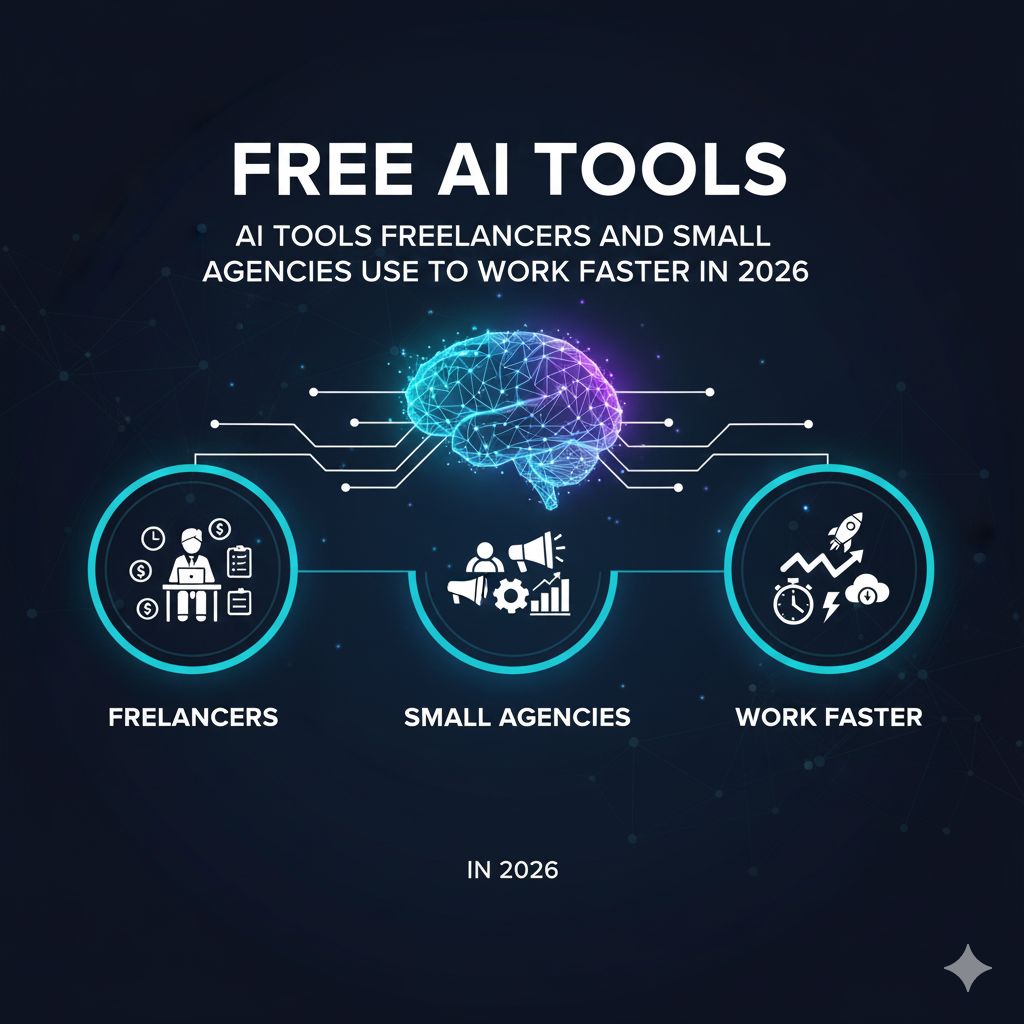
Freelancers and small agencies deal with tight deadlines, multiple clients, and constant pressure to deliver quality work quickly. In 2026, the most successful ones are not working longer hours, they’re using AI tools to remove busywork and speed up daily tasks. Below are the AI tools professionals are actively using, explained one by one, along with the real benefits of using them.
ChatGPT
ChatGPT is one of the most versatile AI tools for freelancers and small agencies. Writers use it to draft blog posts, proposals, scripts, and email sequences. Marketers rely on it for ad copy, landing pages, and content ideas. Developers and consultants use it to explain complex concepts in simple language for clients.
The biggest benefit of ChatGPT is speed. It reduces the time spent on first drafts and brainstorming, allowing freelancers to focus on editing, strategy, and personalization. It also helps maintain consistency across client work, especially when managing multiple projects at once.
Canva AI
Canva AI is widely used by designers, social media managers, and agencies that need fast visuals. It helps generate social media posts, presentations, ads, thumbnails, and brand assets using AI-powered design suggestions.
The main benefit of Canva AI is faster design output without compromising quality. Freelancers can deliver professional-looking visuals even if they’re not advanced designers. For agencies, it ensures consistent branding while reducing design turnaround time significantly.
Notion AI
Notion AI is a productivity and organization tool that freelancers and agencies use to manage projects, clients, and content planning. It can summarize notes, generate task lists, create project outlines, and even write documentation.
The biggest benefit of Notion AI is clarity and organization. It keeps everything in one place and turns messy ideas into structured plans. This helps freelancers avoid missed deadlines and helps agencies manage multiple clients smoothly.
ClickUp AI
ClickUp AI is used for task management and team collaboration. It helps generate task descriptions, timelines, progress updates, and workflow suggestions automatically.
The benefit of ClickUp AI is reduced project management effort. Teams spend less time explaining tasks and more time completing them. It also improves transparency with clients by keeping progress clear and easy to track.
Grammarly AI
Grammarly AI helps improve writing quality across emails, proposals, reports, and client messages. It checks grammar, tone, clarity, and professionalism in real time.
The key benefit of Grammarly AI is better communication in less time. Freelancers respond faster while sounding confident and polished. This is especially useful for professionals working with international clients or high-value contracts.
Surfer SEO
Surfer SEO is an AI-powered optimization tool used by content writers and SEO agencies. It analyzes top-ranking pages and suggests keyword usage, structure, and improvements while writing.
The biggest benefit of Surfer SEO is faster SEO content creation. Writers no longer need hours of research before starting. Agencies can produce high-ranking content efficiently and scale their services without increasing workload.
Otter AI
Otter AI records, transcribes, and summarizes meetings automatically. Freelancers and consultants use it during client calls, discovery sessions, and team meetings.
The benefit of Otter AI is time-saving and accuracy. It eliminates manual note-taking and ensures important details are never missed. After meetings, clear summaries help with faster follow-ups and better execution.
Fireflies AI
Fireflies AI works similarly to Otter but focuses heavily on conversation insights. It highlights action items, decisions, and key points from meetings.
The benefit of Fireflies AI is improved client follow-through. Agencies can quickly turn conversations into tasks and deliverables, reducing miscommunication and saving time after calls.
Buffer AI
Buffer AI helps freelancers and agencies schedule social media posts, analyze engagement, and optimize posting times using AI insights.
The main benefit of Buffer AI is efficiency in social media management. One person can manage multiple accounts without constantly monitoring performance. Better timing and content suggestions also improve engagement and lead generation.
Bonsai
Bonsai is an AI-powered business management tool for freelancers. It helps create contracts, proposals, invoices, and payment reminders automatically.
The biggest benefit of Bonsai is reduced admin stress. Freelancers get paid faster, spend less time on paperwork, and look more professional in front of clients.
Zoho Invoice
Zoho Invoice uses AI to manage billing, expenses, and recurring payments. It’s commonly used by small agencies handling multiple clients.
The benefit of Zoho Invoice is better financial control. Automated invoicing and reminders improve cash flow and reduce manual tracking work.
In 2026, AI tools are no longer optional for freelancers and small agencies. They are essential for staying competitive, delivering faster, and maintaining work-life balance. When used smartly, these tools don’t replace human creativity or expertise. They simply remove friction, save time, and allow professionals to focus on what truly matters.
If you liked this article, don’t forget to like it, share it with others who might find it useful, and leave a comment below — I’d love to hear your thoughts and experiences with these AI tools.
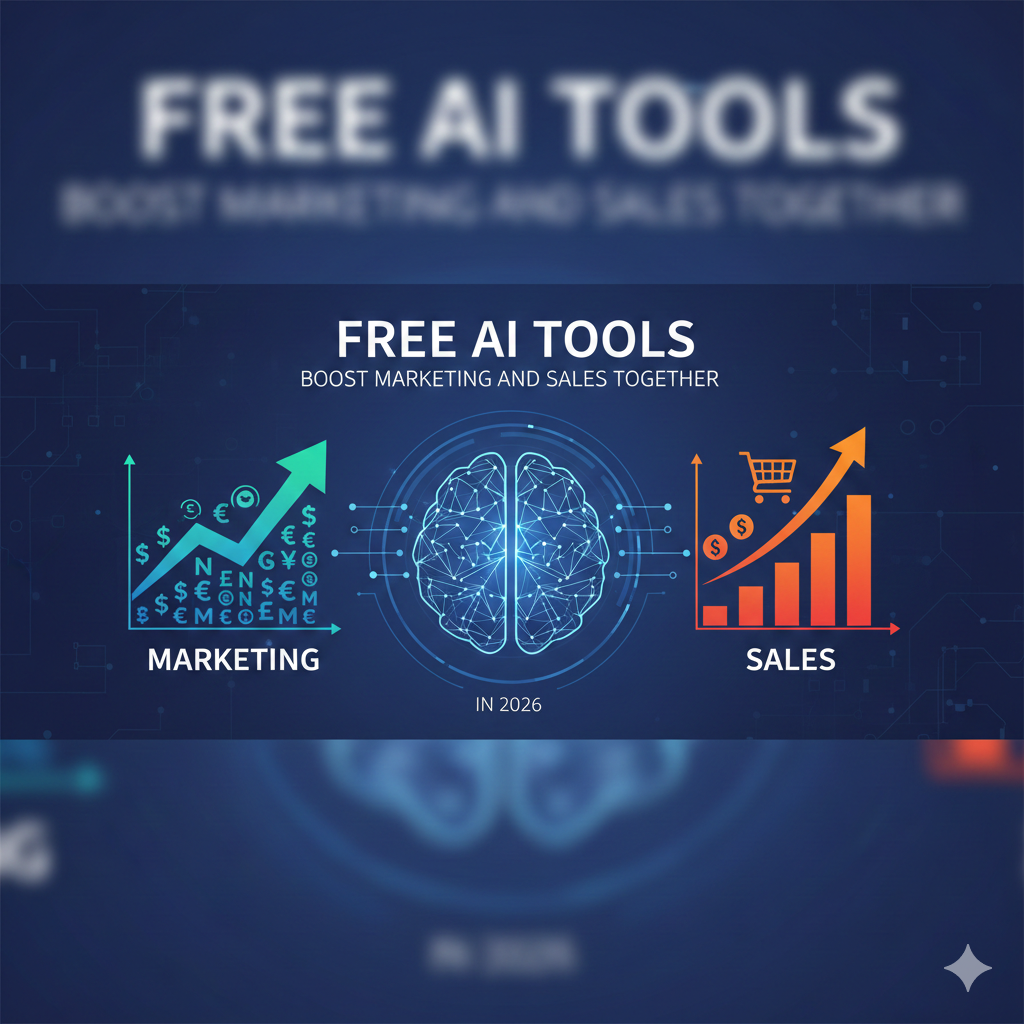
Free AI tools are no longer just helpful add-ons. In 2026, they have become essential for small businesses that want to grow faster without increasing costs. The real power of AI shows up when marketing and sales work together instead of separately. The tools below do exactly that by attracting leads, engaging them, and converting them into customers using automation and smart insights.
HubSpot Free CRM
HubSpot’s free CRM is one of the most powerful AI-driven platforms for combining marketing and sales in one system. It tracks customer activity across emails, websites, and forms, then uses AI insights to help businesses follow up at the right time. From a marketing perspective, it shows which content attracts leads. From a sales perspective, it helps prioritize the most engaged prospects. Many small businesses rely on HubSpot CRM for small businesses because it removes the gap between lead generation and conversion.
ChatGPT for Content and Sales Messaging
ChatGPT plays a major role in both marketing and sales by helping businesses communicate better. It can generate blog posts, landing page copy, ad captions, email campaigns, and even sales replies in seconds. When optimized with high-volume keywords like free AI tools for marketing and sales or AI tools for small businesses, this content brings organic traffic and qualified leads. On the sales side, ChatGPT helps craft persuasive follow-ups, proposals, and responses that sound natural and human, not scripted.
Mailchimp Free Plan
Mailchimp’s free plan uses AI to improve email marketing performance, which directly impacts sales. The platform suggests better subject lines, predicts optimal send times, and helps personalize campaigns based on user behavior. This means marketing emails get more opens, and sales emails get better responses. By using Mailchimp’s AI-powered marketing tools, small businesses can nurture leads automatically and convert them without constant manual effort.
Tidio AI Chatbot
Tidio combines live chat and AI chatbots to support both marketing engagement and sales qualification. When visitors land on your website, the AI chatbot starts conversations, answers common questions, and guides users toward products or services. This improves marketing engagement while also capturing sales-ready leads. Tools like Tidio AI chatbot for lead generation are especially useful for businesses that want 24/7 customer interaction without hiring extra staff.
Zoho CRM Free Edition
Zoho CRM’s free version offers AI-powered features that help manage leads and sales pipelines efficiently. Its AI assistant analyzes customer data, predicts deal outcomes, and suggests the best actions to take next. Marketing teams can see which campaigns generate the most leads, while sales teams can focus on high-intent prospects. Zoho CRM for small business sales and marketing is a strong choice for companies that want structure without complexity.
Buffer AI for Social Media Marketing
Buffer uses AI to help businesses plan, schedule, and optimize social media content. It suggests posting times, analyzes engagement, and helps improve content performance. This increases visibility and brand awareness, which supports marketing goals. At the same time, better engagement leads to more inquiries, messages, and conversions. Using AI social media marketing tools like Buffer helps turn followers into paying customers.
Hootsuite Free Tools
Hootsuite’s AI features help track trends, analyze audience behavior, and recommend content strategies. Marketing teams use it to increase reach and consistency, while sales teams benefit from better audience targeting and engagement insights. Social interactions often become sales conversations, and AI helps identify those opportunities early. This makes Hootsuite a useful AI tool for marketing and sales alignment.
Wix AI Website Builder
Wix uses AI to design websites that are optimized for conversions. It recommends layouts, headlines, and calls to action based on user behavior. From a marketing angle, this improves user experience and SEO performance. From a sales angle, it guides visitors toward actions like sign-ups, bookings, or purchases. Wix AI website tools for small businesses help turn traffic into real revenue.
Shopify AI Tools
Shopify includes AI-driven features that support ecommerce marketing and sales together. It helps optimize product descriptions, recommend pricing strategies, and personalize customer journeys. Marketing campaigns bring users to the store, and AI helps convert them by improving product visibility and checkout experience. Shopify AI tools for ecommerce businesses are especially valuable for online sellers with limited teams.
Google Analytics with AI Insights
Google Analytics uses AI-powered insights to show which marketing channels lead to actual sales. It highlights trends, predicts user behavior, and identifies high-performing content. This allows businesses to focus on strategies that generate revenue instead of just traffic. Using Google Analytics for AI-driven marketing and sales decisions ensures smarter growth based on real data.
Notion AI for Marketing and Sales Planning
Notion AI helps organize marketing calendars, sales workflows, and content plans in one place. It summarizes data, generates ideas, and keeps teams aligned. When marketing and sales share the same system, communication improves and execution becomes smoother. Notion AI for small business productivity supports consistency, which is key for long-term growth.
In 2026, success is no longer about using more tools, but using smarter ones. Free AI tools allow marketing and sales to work together as one system, guiding customers from first click to final purchase. When used correctly, these tools save time, reduce costs, and create a more personal customer experience.
If you Liked this article, Please don’t forget to like, share with your friends, and leave a comment—we’d love to hear your thoughts! Thank You !
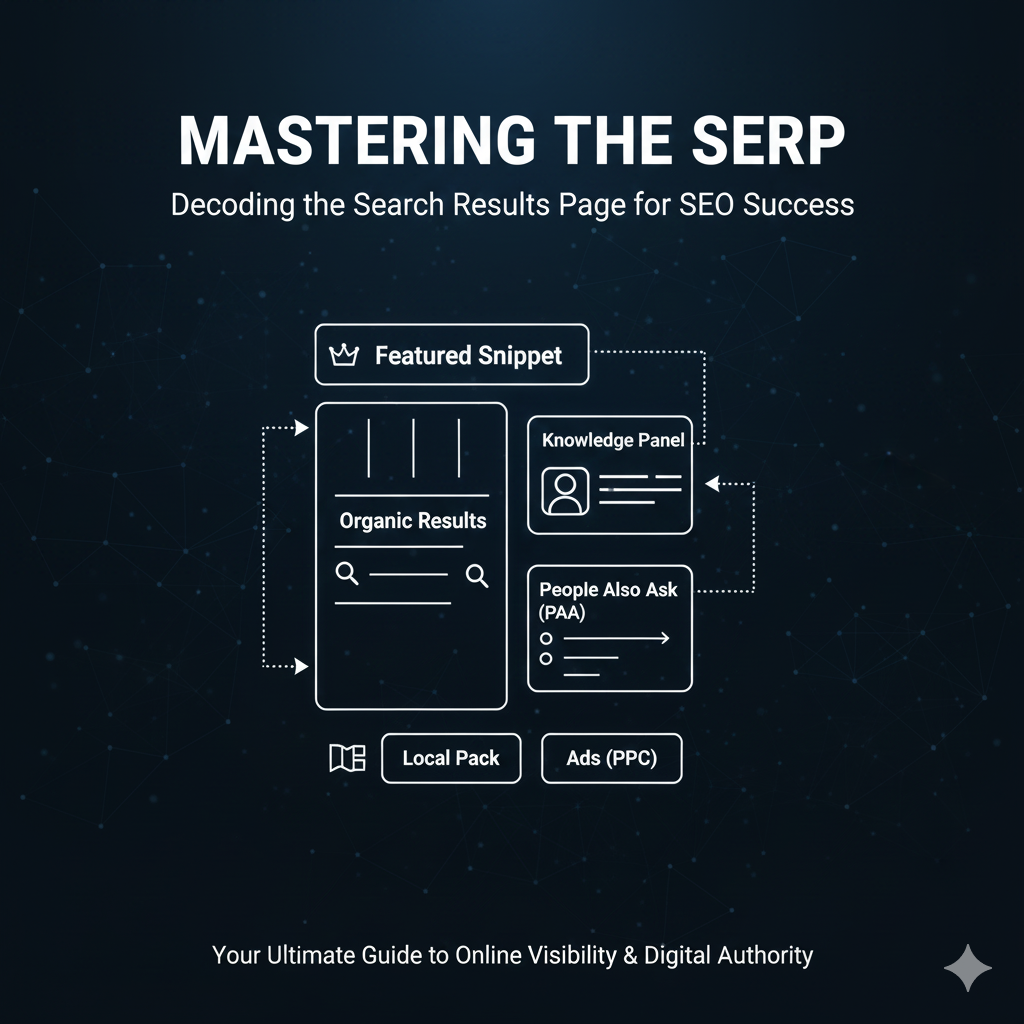
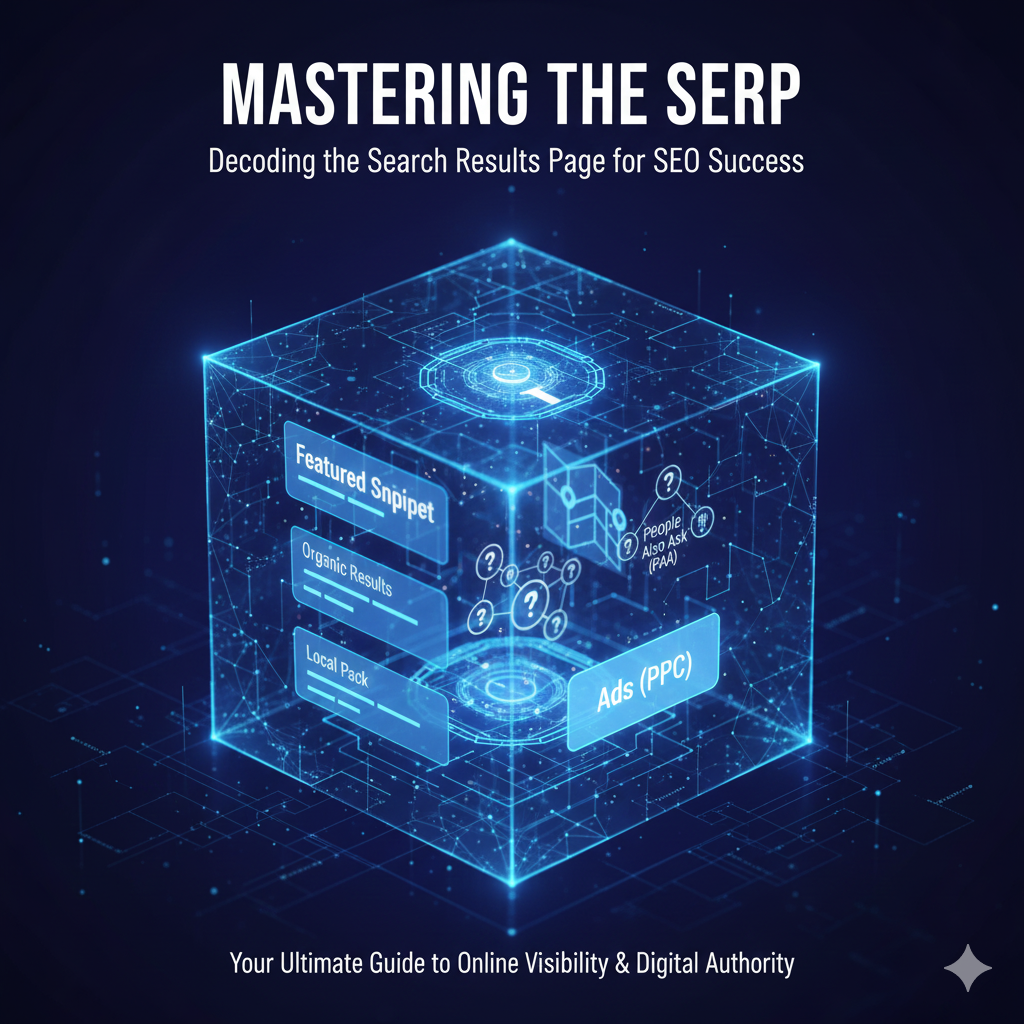
In the modern digital landscape, the first encounter a consumer has with your brand occurs on a search engine screen. That screen—the Search Engine Results Page (SERP)—is far more than a mere directory; it is the most critical commercial and informational landscape on the internet. It represents the culmination of billions of data points, complex algorithms, and Google’s unwavering mission to answer every user’s question instantly.
For any content professional, entrepreneur, or strategist, truly mastering online visibility means understanding not just what SERP is, but how its evolving features—from Featured Snippets to Knowledge Panels—dictate clicks, establish authority, and determine your long-term SEO success. This detailed analysis explores the SERP’s architecture and provides the strategic framework necessary to dominate every part of this essential digital real estate.
The Global Shift: From Blue Links to Instant Answers
The fundamental purpose of the SERP is to interpret User Intent—the underlying motive behind a search query. Has the user signaled an intent to buy, to learn, or to navigate to a physical place? The SERP adapts its entire layout instantly to match that goal.
This adaptation has led to the rise of Zero-Click Searches, where the SERP provides the answer directly, eliminating the need for a click. This phenomenon demands a complete overhaul of conventional SEO strategy. Visibility must now be earned across multiple formats to ensure the brand captures attention, even if a direct website visit isn’t the user’s first action.
Dissecting the Search Landscape: Key Features for Visibility
Modern SERP features are diverse and complex, each requiring a tailored optimization approach. Achieving high visibility means strategically targeting several of these components simultaneously.
The Traditional Powerhouse: Organic Rankings
These remain the standard, numbered listings that are earned, not bought. They form the critical foundation of any SEO success. Ranking high requires sustained technical site health, a robust backlink profile, and content that demonstrates superior authority and addresses the topic exhaustively.
Position Zero: Capturing the Featured Snippet
The Featured Snippet is the most coveted position, extracted from a top-ranking page and displayed prominently above the first organic result. Securing this slot provides immediate credibility and dramatically boosts the Click-Through Rate (CTR). Winning it requires structuring content with clear, concise question-and-answer headings and immediately fulfilling the query within a precise word count (often 40-60 words).
The User’s Curiosity Roadmap: People Also Ask (PAA)
The PAA box features an expanding list of related questions that users frequently search for during their research journey. This feature is invaluable as it provides immediate insight into user intent and the natural flow of information consumption. Content strategists must integrate these PAA questions as subheadings to ensure their articles comprehensively satisfy every facet of the topic.
The Authority Stamp: Knowledge Panels
Appearing typically on the right side of the desktop screen, the Knowledge Panel provides verified factual summaries about established entities (companies, public figures). This data is drawn from Google’s vast Knowledge Graph. Its appearance establishes immediate trust and legitimacy for a brand. Optimization relies on meticulous data consistency across all verified web sources and maintaining an accurate Google My Business (GMB) profile.
The Commercial Arena: Paid and Shopping Ads
These listings, clearly marked as “Ad,” occupy the prime commercial real estate at the top and bottom of the page. This is the domain of PPC (Pay-Per-Click) advertising, used for high-intent, transactional queries. Analyzing competitor activity here provides vital insights into the most valuable keywords and consumer intent.
Hyper-Local Targeting: The Local Pack
For searches with geographical intent (“best SEO agency near me”), the Local Pack appears, showing a map and 3-4 top local businesses. Domination here is achieved through Local SEO, specifically by optimizing the GMB profile, securing a high volume of positive customer reviews, and ensuring accurate Name, Address, Phone (NAP) citations across the web.
Strategic Application: Elevating Content Beyond Simple Ranking
The complexity of the SERP demands a content strategy focused on maximizing feature capture, not just traditional keyword ranking.
Aligning Content with SERP Intent
Success begins by analyzing the current SERP’s layout for a target keyword: is it showing maps (local intent), snippets (informational intent), or shopping ads (transactional intent)? The content marketing produced must perfectly align with that dominant intent. If the SERP shows an informational bias, the article must prioritize detailed answers and educational value.
The Role of Structured Data (Schema Markup)
To effectively communicate with Google’s algorithms for SERP features like Snippets and Reviews, utilizing Structured Data (Schema Markup) is essential. This technical code tells Google the specific type of content your page contains (e.g., FAQ, How-To Guide, Product Review), making it easier for Google to categorize and feature your content prominently.
Combating Zero-Click Searches
Since the SERP delivers more direct answers, content must be structured to provide the concise answer needed to win the Featured Snippet, while simultaneously offering such immense depth, expertise, and unique insight that the user is compelled to click to read the complete article. This dual focus is the key to maintaining high CTR in the age of instant answers.
The Future: A Personalized, AI-Driven SERP
The SERP is not a static environment; it is constantly evolving, with new AI-driven features (like Google’s Search Generative Experience, or SGE) beginning to redefine the search journey. However, the foundational principle remains fixed: the SERP will always reward content that demonstrates the highest authority and best fulfills the user’s intent.
By integrating the strategic targeting of SERP features into your content creation process, you ensure your business moves beyond chasing fleeting traffic and establishes resilient, high-visibility SEO success in the ever-changing digital landscape. Mastering the SERP is, unequivocally, mastering the modern marketplace.
-
Events6 months ago
New Year’s Eve celebration 2025
-
News6 months ago
Portuguese President Marcelo Rebelo de Sousa Undergoes Emergency Surgery for Incarcerated Hernia
-
Health and Lifestyle7 months ago
5 Unique Ways to Plan a Perfect, Stress-Free Holiday
-
Business7 months ago
Digital Product Business 2026: How to Start, Sell & Grow Online for Passive Income
-
Health and Lifestyle7 months ago
Top 5 Easy-to-Cook and Quick Healthy Meals (Ready in 30 Minutes or Less)Top 5 Easy to Cook and Quick Healthy Meals
-
Health and Lifestyle7 months ago
5 Easy Daily Habits for Better Health
-
Fashion6 months ago
Top 5 Winter Tracksuits for Men 2025
-
Entertainment7 months ago
HUM TV’s ‘Jinn Ki Shadi Unki Shadi’ Review: Wahaj Ali & Sehar Khan’s Hit Horror Comedy, Trending Now
bombing fishing
January 14, 2026 at 2:25 pm
Bombing fishing, huh? That sounds like some seriously explosive fun! I gotta give it a try. Wish me luck! Dive in with bombing fishing!