
Entertainment
HUM TV’s ‘Jinn Ki Shadi Unki Shadi’ Review: Wahaj Ali & Sehar Khan’s Hit Horror Comedy, Trending Now


Entertainment
The Obsession Economy: 7 Storytelling Secrets That Keep Modern Fandoms Hooked (From MCU to Starfield)
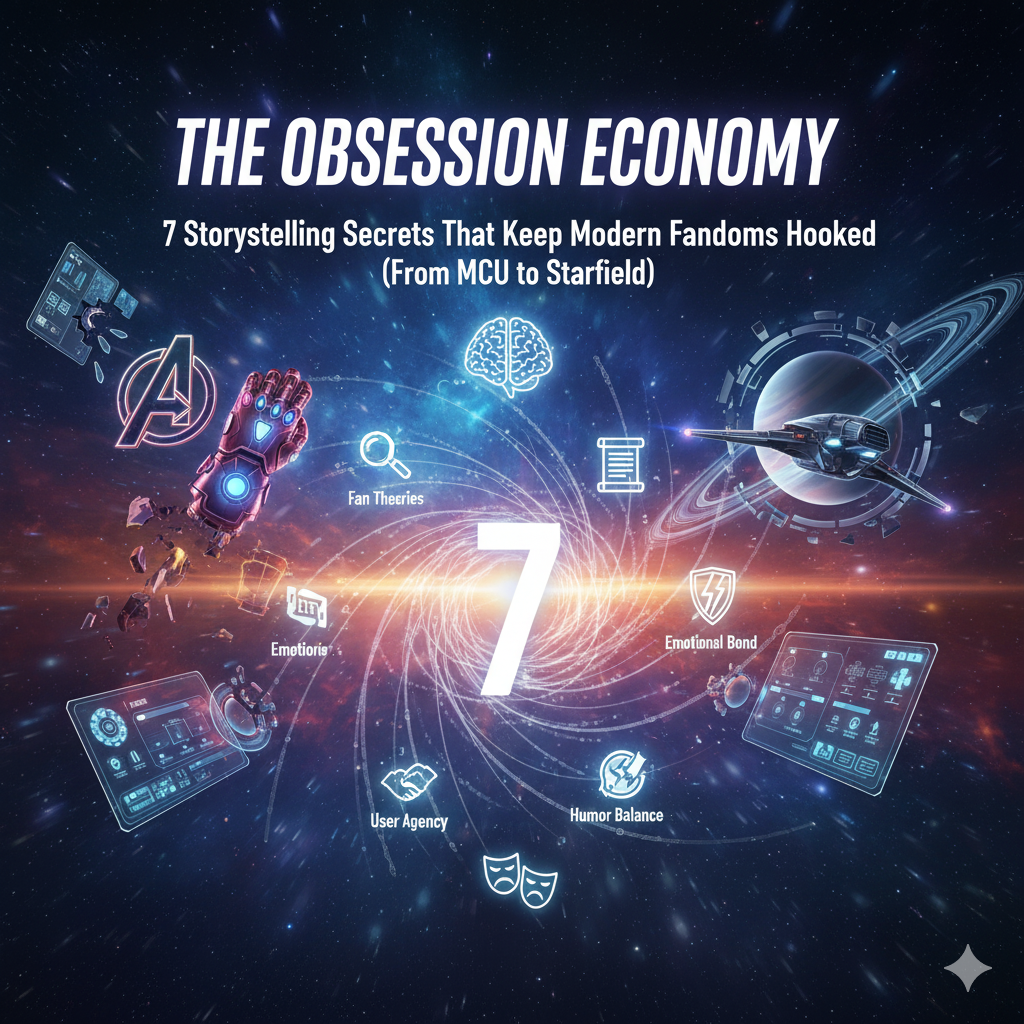
We’re living in a strange, fascinating era—an era where movies, games, and fictional universes have become more than entertainment. They’ve become homes, communities, and in many ways, identities.
Think about it.
The moment a new MCU trailer drops, millions of people pause their day.
A single leaked screenshot from Starfield can dominate social media for an entire week.
A surprising character moment in a TV show becomes worldwide conversation within minutes.
Why? Because modern storytelling isn’t about storytelling anymore.
It’s about creating obsession.
And if you’ve ever wondered why certain franchises create massive, loyal, unstoppable fandoms while others fade away quietly…
This article breaks down the 7 real storytelling secrets behind the fandoms that refuse to die.
Let’s go deep — deeper than surface-level “good storytelling.”
This is the science of obsession.
1. They Build Universes, Not Stories
One of the biggest shifts in modern entertainment is this:
People don’t want a single story.
They want a world.
The MCU isn’t just a set of movies — it’s a universe with history, future timelines, side stories, crossovers, alternate realities, and a sense that anything can happen anywhere.
Starfield does the same thing with its galaxy:
- Hundreds of planets
- Factions with political agendas
- Cultures with their own beliefs
- Hidden ancient mysteries
- Places that feel lived-in
This kind of world-building does something psychologically powerful.
It creates place attachment.
Fans don’t follow the story because they like it.
They follow it because they want to stay inside the world.
They want to know more.
They want to explore.
They want to belong.
Once someone falls in love with a fictional universe, they’re not just a viewer or player anymore — they become a resident of that world.
That is the beginning of obsession.
2. They Create Characters You Don’t Just Watch — You Care About
The reason Tony Stark’s death shook millions of people…
The reason Loki has some of the most devoted fans in the world…
The reason Starfield players get attached to companions…
It’s simple:
Modern fandoms revolve around emotionally complex, deeply human characters.
Characters with flaws, humor, insecurity, trauma, dreams, guilt, doubts — the things real people struggle with.
Audiences today don’t want perfect heroes.
They want relatable humans inside impossible situations.
It’s why people connect to:
- Iron Man’s fear of failure
- Wanda’s grief
- Loki’s loneliness
- Starfield characters questioning meaning and survival
- Guardians of the Galaxy being dysfunctional yet loving
When a character feels human, something powerful happens:
Fans start seeing themselves in that character.
And when you see yourself in a story, you don’t walk away from it.
3. They Create Curiosity Loops Through Mysteries, Clues & Lore
Here’s something many people don’t realize:
The human brain is addicted to unfinished information.
This is called the Zeigarnik Effect, a psychological phenomenon where people can’t stop thinking about incomplete stories, mysteries, or unanswered questions.
Modern creators use this to perfection:
- Hidden Easter eggs
- Foreshadowing
- Timeline gaps
- Cryptic dialogues
- Post-credit scenes
- Secret items
- Lore buried in the world
- Background clues hinting at huge future events
This creates curiosity loops.
Fans want answers → They search online → They make theories → They rewatch → They discuss → They become more invested.
This is why the MCU dominates YouTube theory channels.
This is why Starfield lore videos keep trending even when the game isn’t new.
This is why fans debate tiny details for YEARS.
Mystery is fuel.
Curiosity is glue.
And lore is the bridge that keeps fans obsessed long after the story ends.
4. They Tell Long-Term Stories That Reward Patience
One-off stories create entertainment.
Long-term stories create investment.
The MCU didn’t just tell stories — it built Phases, connecting them with:
- Recurring characters
- Slow-burn arcs
- Future hints
- Crossover moments
- Payoffs years later
This makes the audience feel like they’re watching one giant, living narrative.
Starfield does the same by slowly revealing universal truths, connecting early discoveries to late-game revelations, and encouraging players to piece together the bigger picture over time.
This long-term narrative strategy does two things:
- It creates anticipation, which is scientifically addictive.
- It makes every piece of the story feel important, which keeps fans engaged for years.
When a story feels like a puzzle that spans across movies, episodes, games, or expansions, fans stay loyal because they want to see the final picture.
5. They Turn Fans Into Participants, Not Just Viewers
This is one of the biggest secrets behind modern fandom success:
People don’t just consume stories — they join them.
Today’s fans want to contribute, react, build, influence, and express themselves inside the fandom world.
Creators encourage this by:
- Highlighting fan art
- Accepting fan theories
- Allowing game modding
- Responding to fans on social media
- Sharing behind-the-scenes creative processes
- Creating open-world choices that feel personal
The result?
Fans feel like the story belongs to them too.
And once someone feels ownership, you have them for life.
Participation turns fandom into community, and community turns fandom into culture.
6. They Maintain Constant Hype — No Gaps, No Silence
Here’s a truth in the obsession economy:
Silence kills momentum.
The biggest franchises stay relevant because they never let fans forget them.
Even between major releases, they drop:
- Teaser clips
- Set photos
- BTS videos
- Actor interviews
- Leaks (sometimes intentionally)
- Mini announcements
- Concept art
- Developer diaries
- Crossovers
- Spin-off hints
Every drop extends the hype cycle.
The audience stays excited.
The conversation stays alive.
The fandom stays active.
This is why the MCU always announces future phases early.
It’s why Starfield releases developer updates regularly.
It’s why anime studios share small artwork months before an episode airs.
Keeping the hype warm is one of the strongest tools of the obsession economy.
7. They Deliver Emotional Moments That Become Cultural Events
In the end, every fandom becomes loyal because of one thing:
Emotion.
Emotional moments — powerful, shocking, heartbreaking, uplifting — create permanent memory.
Think about:
- “Avengers… assemble.”
- Loki hugging Thor
- A beloved Starfield companion dying
- A shocking twist that makes social media explode
- A final battle that makes people cry
- A sacrifice that breaks your heart
- A reveal that gives you chills
These emotional events create shared experiences across millions of fans.
People remember:
Where they were…
How they felt…
Who they watched it with…
How the community reacted…
Emotion creates nostalgia.
Nostalgia creates loyalty.
And loyalty is the foundation of obsession.
Conclusion: Why Modern Fandoms Are Built Differently
If you look closely, every mega-franchise today — from the MCU to Starfield to major anime and game universes — uses the same psychological formula:
**A living world
- emotionally real characters
- mystery
- long-term storytelling
- constant fan involvement
- hype reinforcement
- unforgettable emotional payoffs**
This isn’t accidental.
It’s intentional.
It’s strategic.
It’s storytelling evolved into a science.
We’re in the era where stories don’t just entertain — they shape culture, create communities, and become lifelines for millions of people.
Whether you’re a writer, filmmaker, game developer, marketer, or creator, these 7 secrets are your blueprint to building an audience that doesn’t just watch your work…
They live in it.
They feel it.
They obsess over it.
And most importantly —
They never leave.
-
Events3 months ago
New Year’s Eve celebration 2025
-
Health and Lifestyle3 months ago
5 Unique Ways to Plan a Perfect, Stress-Free Holiday
-
Health and Lifestyle3 months ago
5 Easy Daily Habits for Better Health
-
Health and Lifestyle3 months ago
Top 5 Easy-to-Cook and Quick Healthy Meals (Ready in 30 Minutes or Less)Top 5 Easy to Cook and Quick Healthy Meals
-
Fashion3 months ago
Top 5 Winter Tracksuits for Men 2025
-
News3 months ago
Portuguese President Marcelo Rebelo de Sousa Undergoes Emergency Surgery for Incarcerated Hernia
-
Business3 months ago
Digital Product Business 2026: How to Start, Sell & Grow Online for Passive Income
-
Health and Lifestyle3 months ago
How to Stay Fit and Healthy in 2026 | Easy Lifestyle Tips