News
GULPLAZA FIRE TRAGEDY 2026

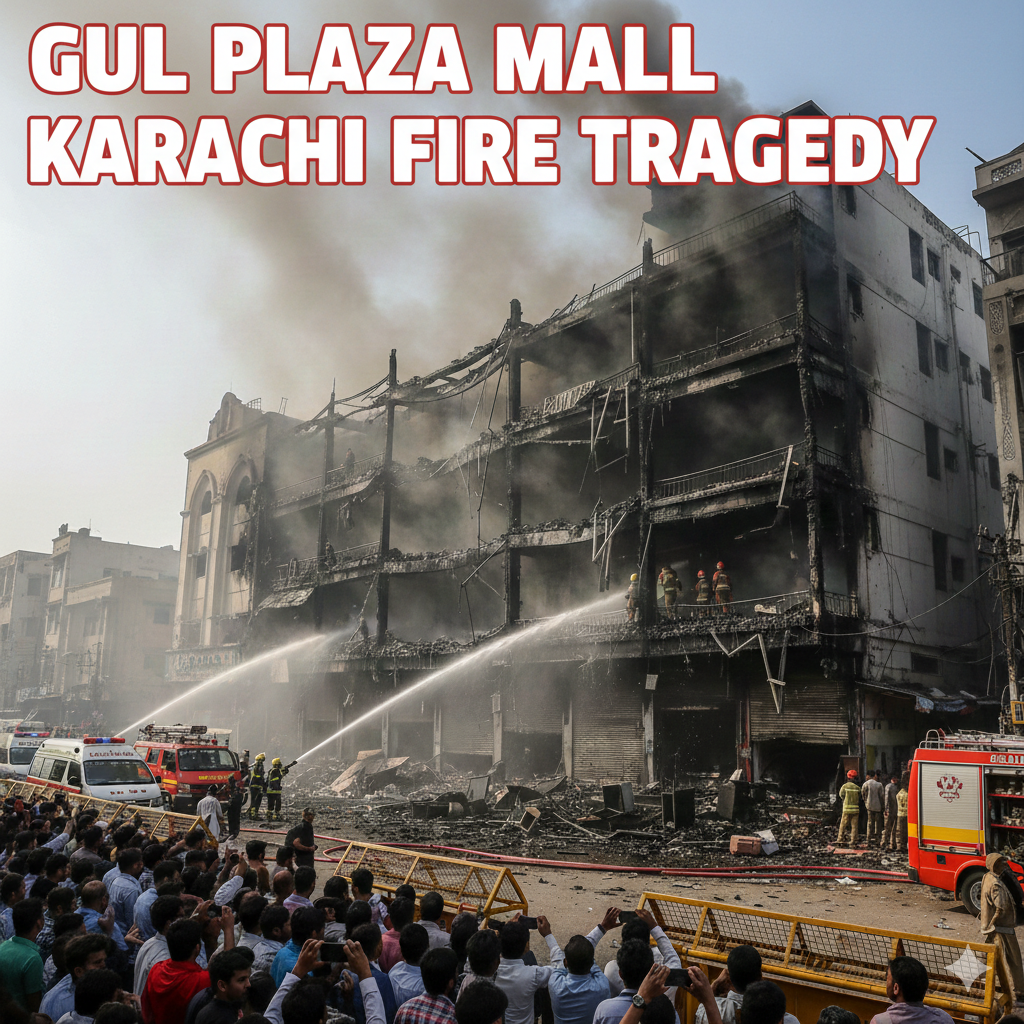
It all began on the night of January 17, 2026, at Gul Plaza, a sprawling multi-storey shopping complex on MA Jinnah Road in downtown Karachi, one of the busiest commercial districts in the city. The building was home to around 1,200 shops selling everything from clothes and carpets to household goods. At roughly 10 p.m., a fire broke out on the ground floor and, because much of what was inside was highly flammable, it raced upward through the building. Thick black smoke spread quickly, and the blaze engulfed nearly every floor within minutes.
Fire crews were called in, but they faced enormous challenges from the start. Heavy traffic and narrow streets delayed their arrival, and once on site they discovered that the old building lacked basic safety features like clearly marked, accessible fire exits, sprinklers, or a proper ventilation system. Most of the mall’s 16 exits were found to be locked as the fire spread, leaving many inside trapped with no easy way out. Smoke filled stairwells and corridors faster than survivors could escape, and rescuers were initially unable to enter large parts of the structure because of extreme heat and the threat of collapse.
The battle to control the inferno stretched on for more than 36 hours. Hundreds of firefighters, Rescue 1122 teams, and emergency personnel worked tirelessly, but even after the flames were finally suppressed, thick smoke and hot spots continued to smolder beneath the rubble. Portions of the building’s front and rear had collapsed under the toll of the fire, making the structure unstable and dangerous to enter.
As rescue and recovery efforts continued, the human cost became ever clearer. Official counts shifted as bodies were recovered from the debris, and many more people remained unaccounted for as families waited anxiously for news. At one point, authorities reported at least 26 to 28 confirmed deaths, including children, while dozens of others were still missing and feared buried under the ruins. DNA testing had begun to identify victims because many remains were badly burned.
Among the dead was a firefighter, Furqan Shaukat, who lost his life while trying to control the blaze. Many people were treated for smoke inhalation and burns at local hospitals, and hundreds of shopkeepers now face the heartbreaking loss of their livelihoods as nearly all the goods in those 1,200 shops were destroyed. Early estimates suggest economic losses could be well over tens of billions of rupees, with many traders left without insurance or compensation for their stock and businesses.
The tragedy has stirred deep grief and anger across the city. Relatives of the missing gathered at the gutted site, searching for answers. Some criticized the slow emergency response and the lack of basic safety measures in a building that had been long known to be overcrowded and poorly maintained. Calls for accountability have grown louder, urging strict enforcement of fire safety laws, better emergency planning, and infrastructure improvements to prevent a repeat of such a disaster.
Officials, including the Sindh chief minister and federal leaders, have promised investigations into the causes of the fire and the adequacy of the response, and have vowed support for victims’ families and affected traders. But for many people in Karachi, the pain of what was lost — lives, dreams, and livelihoods — will linger far longer than the ashes at Gul Plaza.