Business
What is SERP ?

In the modern digital landscape, the first encounter a consumer has with your brand occurs on a search engine screen. That screen—the Search Engine Results Page (SERP)—is far more than a mere directory; it is the most critical commercial and informational landscape on the internet. It represents the culmination of billions of data points, complex algorithms, and Google’s unwavering mission to answer every user’s question instantly.
For any content professional, entrepreneur, or strategist, truly mastering online visibility means understanding not just what SERP is, but how its evolving features—from Featured Snippets to Knowledge Panels—dictate clicks, establish authority, and determine your long-term SEO success. This detailed analysis explores the SERP’s architecture and provides the strategic framework necessary to dominate every part of this essential digital real estate.
The Global Shift: From Blue Links to Instant Answers
The fundamental purpose of the SERP is to interpret User Intent—the underlying motive behind a search query. Has the user signaled an intent to buy, to learn, or to navigate to a physical place? The SERP adapts its entire layout instantly to match that goal.
This adaptation has led to the rise of Zero-Click Searches, where the SERP provides the answer directly, eliminating the need for a click. This phenomenon demands a complete overhaul of conventional SEO strategy. Visibility must now be earned across multiple formats to ensure the brand captures attention, even if a direct website visit isn’t the user’s first action.
Dissecting the Search Landscape: Key Features for Visibility
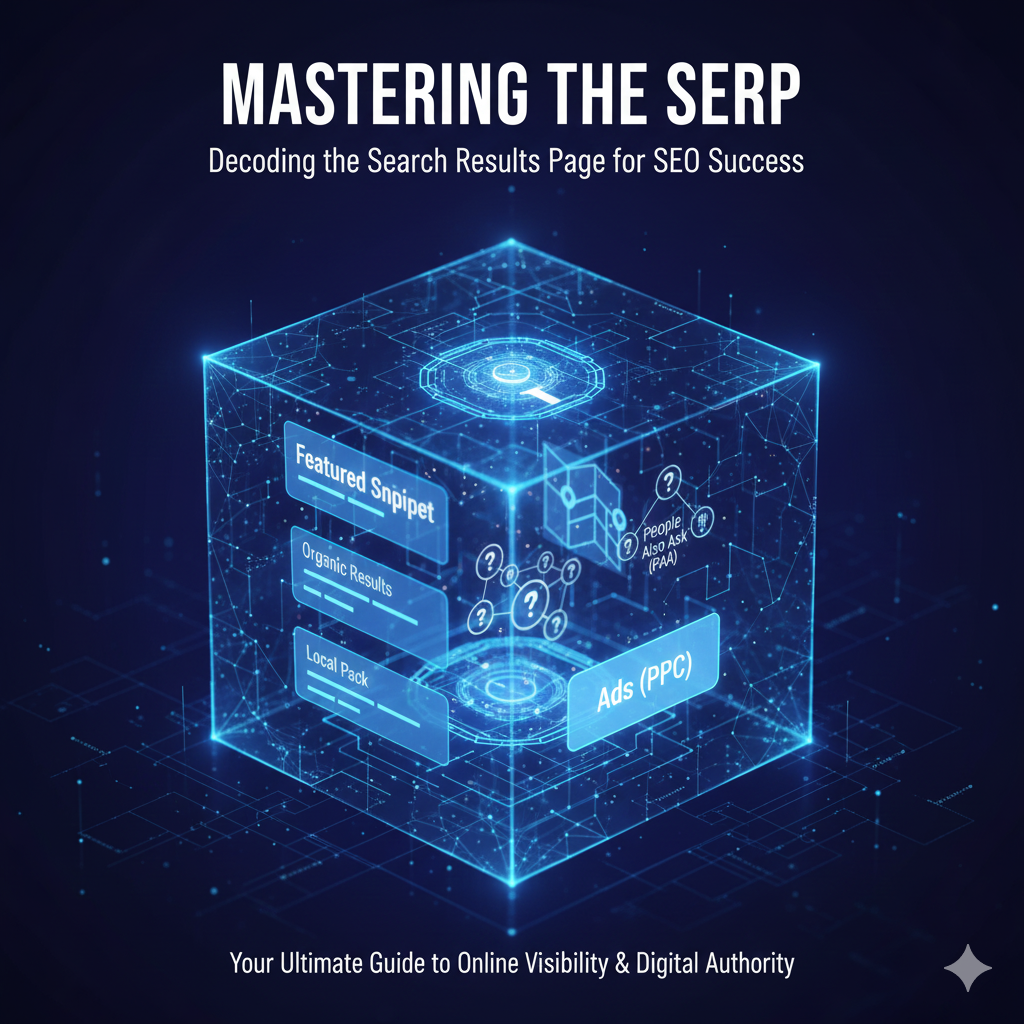
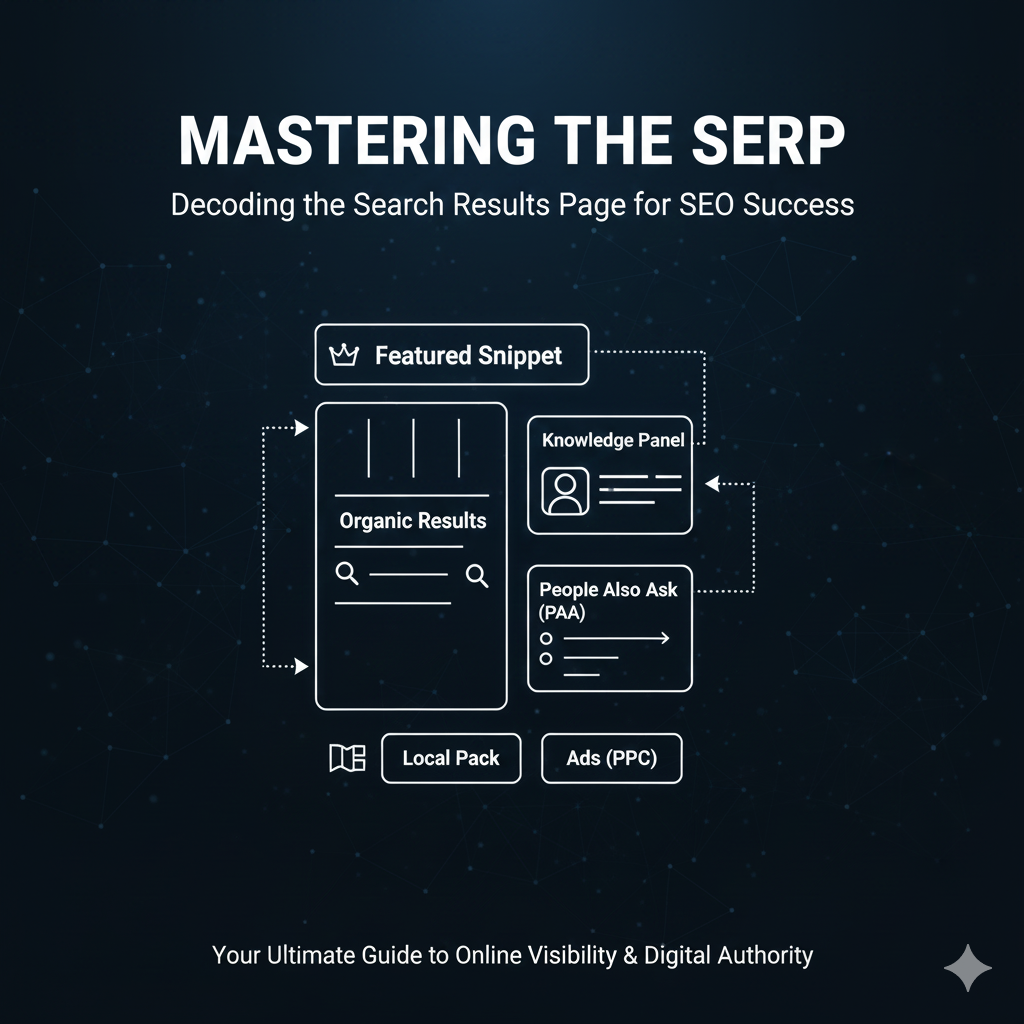
Modern SERP features are diverse and complex, each requiring a tailored optimization approach. Achieving high visibility means strategically targeting several of these components simultaneously.
The Traditional Powerhouse: Organic Rankings
These remain the standard, numbered listings that are earned, not bought. They form the critical foundation of any SEO success. Ranking high requires sustained technical site health, a robust backlink profile, and content that demonstrates superior authority and addresses the topic exhaustively.
Position Zero: Capturing the Featured Snippet
The Featured Snippet is the most coveted position, extracted from a top-ranking page and displayed prominently above the first organic result. Securing this slot provides immediate credibility and dramatically boosts the Click-Through Rate (CTR). Winning it requires structuring content with clear, concise question-and-answer headings and immediately fulfilling the query within a precise word count (often 40-60 words).
The User’s Curiosity Roadmap: People Also Ask (PAA)
The PAA box features an expanding list of related questions that users frequently search for during their research journey. This feature is invaluable as it provides immediate insight into user intent and the natural flow of information consumption. Content strategists must integrate these PAA questions as subheadings to ensure their articles comprehensively satisfy every facet of the topic.
The Authority Stamp: Knowledge Panels
Appearing typically on the right side of the desktop screen, the Knowledge Panel provides verified factual summaries about established entities (companies, public figures). This data is drawn from Google’s vast Knowledge Graph. Its appearance establishes immediate trust and legitimacy for a brand. Optimization relies on meticulous data consistency across all verified web sources and maintaining an accurate Google My Business (GMB) profile.
The Commercial Arena: Paid and Shopping Ads
These listings, clearly marked as “Ad,” occupy the prime commercial real estate at the top and bottom of the page. This is the domain of PPC (Pay-Per-Click) advertising, used for high-intent, transactional queries. Analyzing competitor activity here provides vital insights into the most valuable keywords and consumer intent.
Hyper-Local Targeting: The Local Pack
For searches with geographical intent (“best SEO agency near me”), the Local Pack appears, showing a map and 3-4 top local businesses. Domination here is achieved through Local SEO, specifically by optimizing the GMB profile, securing a high volume of positive customer reviews, and ensuring accurate Name, Address, Phone (NAP) citations across the web.
Strategic Application: Elevating Content Beyond Simple Ranking
The complexity of the SERP demands a content strategy focused on maximizing feature capture, not just traditional keyword ranking.
Aligning Content with SERP Intent
Success begins by analyzing the current SERP’s layout for a target keyword: is it showing maps (local intent), snippets (informational intent), or shopping ads (transactional intent)? The content marketing produced must perfectly align with that dominant intent. If the SERP shows an informational bias, the article must prioritize detailed answers and educational value.
The Role of Structured Data (Schema Markup)
To effectively communicate with Google’s algorithms for SERP features like Snippets and Reviews, utilizing Structured Data (Schema Markup) is essential. This technical code tells Google the specific type of content your page contains (e.g., FAQ, How-To Guide, Product Review), making it easier for Google to categorize and feature your content prominently.
Combating Zero-Click Searches
Since the SERP delivers more direct answers, content must be structured to provide the concise answer needed to win the Featured Snippet, while simultaneously offering such immense depth, expertise, and unique insight that the user is compelled to click to read the complete article. This dual focus is the key to maintaining high CTR in the age of instant answers.
The Future: A Personalized, AI-Driven SERP
The SERP is not a static environment; it is constantly evolving, with new AI-driven features (like Google’s Search Generative Experience, or SGE) beginning to redefine the search journey. However, the foundational principle remains fixed: the SERP will always reward content that demonstrates the highest authority and best fulfills the user’s intent.
By integrating the strategic targeting of SERP features into your content creation process, you ensure your business moves beyond chasing fleeting traffic and establishes resilient, high-visibility SEO success in the ever-changing digital landscape. Mastering the SERP is, unequivocally, mastering the modern marketplace.